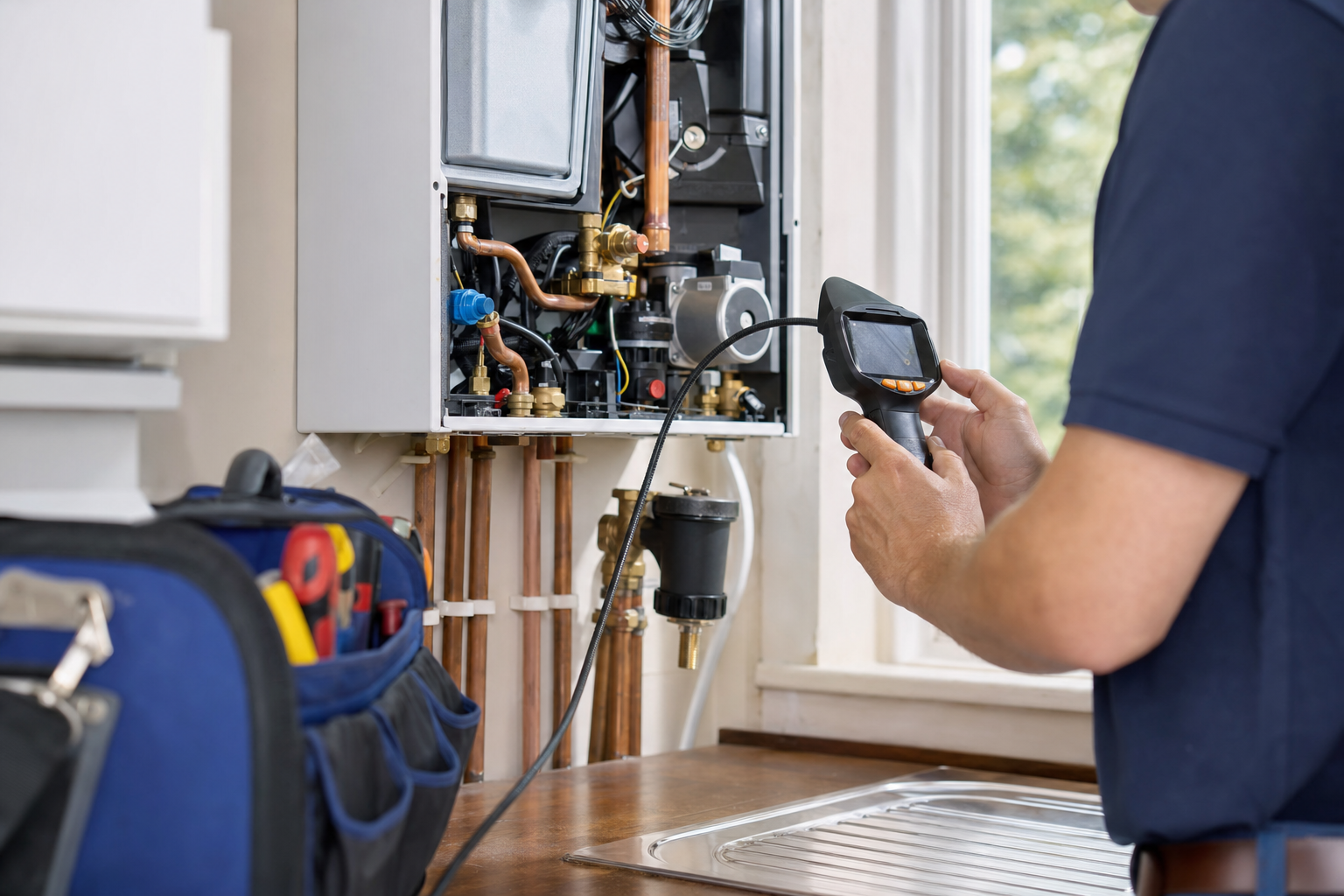
If you need help with water leaks Hampton Hill, Bates N Plumbing provides practical leak detection and repair support for homes, rentals and managed properties across the area. Water leaks can start small and stay hidden for days or weeks, but they can quickly lead to damaged plaster, stained ceilings, damp cupboards, pressure loss and higher water bills. The key is to find the source early, make the area safe and repair the failed component properly.
Our water leak service is built around the most common local problems: hidden leaks behind units and floors, burst pipe repairs, leaking radiator repairs and leaking waste pipe repairs. We also help customers who are not sure where the water is coming from. In many cases, the visible symptom is not the actual fault. A stain on a ceiling, a damp patch in a vanity unit or a drop in pressure can point to a pipe, fitting, trap, valve, appliance connection or heating component elsewhere in the property.
We work across Hampton Hill and nearby areas including Bushy Park, Hampton Hill High Street, Fulwell Station, Hampton Court Palace and The Green. If you are a homeowner, landlord, tenant or property manager and need clear advice as well as a repair, call 020 3633 6964 or request a visit today.
Water leaks are one of those problems where a calm, methodical approach matters. Some faults are obvious, such as a burst pipe or a leaking radiator valve. Others need a more careful check of the water path, the waste run, the seals around fittings and the condition of pipework hidden inside units or behind boxing. The aim is to identify what is actually failing, not just clean up the visible water and hope it goes away.
Customers should not DIY anything that could make the leak worse, especially if the pipework is under pressure, near electrics or connected to a heating system. If you can safely do so, turn off the nearest isolation valve or the main stop tap, move items away from the wet area and take photos for your records. After that, it is usually best to stop using the affected fitting and get a plumber to inspect it.
Common signs of a water leak include:
- Unexpected damp patches on walls, ceilings or floors
- Water pooling inside cupboards or under sinks
- Persistent dripping sounds when taps are off
- Pressure loss on the heating or hot water side
- Staining, bubbling paint or soft plaster
- A radiator that needs frequent topping up
- Musty smells around units, skirting or flooring
We often see that the customer notices the symptom first and the component second. For example, a leaking waste pipe may show as water inside a vanity unit, while a pipe joint hidden underneath is the real source. A radiator leak may only appear when the heating is on, or after the system expands. A burst pipe can be obvious, but the damage can still be spread along joists, plasterboard or floor voids. That is why leak detection should focus on the route of the water as well as the visible wet area.
For properties near Hampton Hill High Street, older pipework, compact bathrooms and fitted units can make access more awkward. Around busier residential streets and converted homes, leaks may also affect more than one room. If the leak is in a shared or managed property, it is important to record what you have seen and to keep the area safe until the source is found.
Our service includes:
- Leak detections
- Water leak repairs
- Burst pipe repairs
- Leaking radiator repairs
- Leaking waste pipe repairs
We also support related plumbing and heating work where a leak has exposed another issue, including general plumbing, emergency plumbing, boiler repairs, boiler installations, central heating, underfloor heating, gas engineers and blocked drains. If a leak has affected a heating circuit or a waste line, it may need more than a simple tightening of a fitting. The repair may involve resealing, replacing a damaged section, securing pipe support, renewing a trap or checking the system under load.
The sections below explain the main leak types, what they often look like and what customers should avoid doing themselves.
Leak Detections in Hampton Hill
Leak detection is about tracing water back to its source in a controlled way. In Hampton Hill homes, the source may be visible, such as a dripping trap, or hidden inside a unit, behind a bath panel, under floorboards or in a ceiling void. The most useful first step is to work out whether the leak is from clean water, heating water or waste water. That distinction helps narrow down the likely components.
Typical clues include where the damp appears, whether the leak happens only when a tap or appliance is used, and whether pressure is dropping in the heating system. A leak that appears only when the basin is full or the shower is running often points to the waste side. A leak that appears when the heating is on may point to a radiator valve, pipe joint or another heating component. A leak that happens all the time is more likely to be a supply line, valve or hidden pipe fault.
What customers should not DIY: do not start opening sealed pipework, cutting into walls or removing fittings unless you are sure the area is safe and you know how the system is arranged. Guesswork can turn a local leak into a wider repair. If water is near lights, sockets or appliances, switch off the relevant electrical supply if it is safe to do so and wait for a professional inspection.
For landlords and property managers, a good leak report should note where the water was first seen, what fixtures were in use and whether the leak changed after the water was isolated. That information helps speed up diagnosis and reduces unnecessary disturbance. Bates N Plumbing provides clear, service-specific support so the next step is based on the actual problem, not a vague assumption.
Water Leak Repairs in Hampton Hill
Once the fault is found, the repair depends on the component and the condition of the surrounding pipework. Water leak repairs may involve replacing a failed washer, resealing a joint, renewing a section of pipe, tightening and re-supporting pipework or replacing a worn fitting. The important thing is that the repair should address the source of the leak and then be tested under normal use, not just wiped dry and left.
We recently supported a local water leaks enquiry in Hampton Hill where the next step was to identify the likely route of the water and check the fittings safely before any repair was made. In another local job near Fulwell Station, poorly supported pipework beneath a sink was secured and reconnected, and the waste run was tested with full bowls of water to confirm reliable drainage. Near Hampton Court Palace, a basin waste was leaking into the vanity unit; the trap was removed, cleaned, resealed and tested under running water. These are the kinds of practical checks that help confirm the repair is working as intended.
Symptoms that often point to a repairable water leak include:
- Water inside a vanity unit or kitchen cupboard
- Drips appearing after a sink, bath or shower is used
- Loose or poorly supported pipework
- Water tracking along pipes before dripping elsewhere
- Visible corrosion, failed seals or worn compression joints
What customers should not DIY: do not over-tighten fittings, use unsuitable sealants on pressurised pipework or keep reusing a part that is visibly cracked or corroded. A temporary bodge may hide the leak for a short time but often fails again. If the leak involves a concealed pipe, it is safer to isolate the water and let a plumber inspect the area properly.
For properties around Bushy Park and The Green, where homes may have a mix of older and updated plumbing, it is especially useful to check that replacement components match the existing system and are installed with proper support. A good repair is not just about stopping the drip; it is about preventing repeat failure.
Burst Pipe Repairs in Hampton Hill
A burst pipe is one of the most urgent water leak problems because it can release a large volume of water quickly. It may happen due to freezing temperatures, corrosion, movement in pipework, impact damage or a failed joint that finally gives way. Even a small split can cause major damage if it is hidden in a wall or under a floor.
Common signs of a burst pipe include sudden water loss, rapid damp spreading, a noticeable drop in pressure and water escaping from a wall, ceiling or floor area. In some cases, the pipe may not be fully burst but may have split enough to leak heavily when the water is on. If that happens, the first step is to isolate the water supply if it is safe to do so. Then avoid running taps, flushing repeatedly or using appliances connected to the line.
What customers should not DIY: do not try to wrap a burst pipe with tape or makehift materials and assume it is fixed. Do not leave the water on to “see what happens”. Do not drill or cut into a wet wall unless you know exactly what is behind it. Burst pipe repairs often need a proper replacement section and a full test afterwards.
In a burst pipe situation, we look at the visible damage, the likely route of the pipe and whether surrounding materials have been affected. That may include checking for secondary leaks, hidden pooling or water migration into adjacent rooms. For homeowners, landlords and property managers, quick isolation and a clear repair plan can reduce the overall damage and make reinstatement easier later on.
Leaking Radiator Repairs in Hampton Hill
Leaking radiators can show up as water near the valves, corrosion at the bottom edge, damp patches on the wall behind the unit or a heating system that keeps losing pressure. Sometimes the problem is the radiator itself; sometimes it is the valve, the pipe connection or the joint where the radiator meets the system. A leak may only appear when the heating is in use, which can make diagnosis more difficult if the system is checked while cold.
Customers often notice one of these signs first:
- The boiler or heating system needs topping up
- Rust marks or staining on the radiator
- Water around the valve area
- Cold spots plus signs of corrosion
- Drips that appear when the heating comes on
What customers should not DIY: do not drain a heating system unless you know how to do it safely and how to restore pressure afterwards. Do not force old valves or crack open joints that are already corroded. If the leak is active, turning the system off and isolating the radiator if possible is usually the safest first move.
Leaking radiator repairs often involve replacing a valve, tightening a connection, renewing a seal or addressing a faulty component that has started to fail under pressure. Where a leak has run onto floors or skirting, we also consider the wider impact so the system can be returned to safe operation once the repair is complete.
Leaking Waste Pipe Repairs in Hampton Hill
Waste pipe leaks are common under sinks, basins, baths and showers because these fittings are used regularly and often sit inside enclosed units. A leaking waste pipe may drip slowly into a cupboard, run along the underside of a basin or leak only when a fixture is emptied. Because the water is dirty waste water rather than clean supply water, even a small fault can create smells, staining and hygiene issues.
We often find waste pipe issues through symptoms such as:
- Water in the cupboard after a sink or basin is used
- Bad smells from a trap or waste run
- Loose joints or misaligned pipework
- Drips that appear only when water is discharged
- Signs of old sealant, wear or movement in the pipework
What customers should not DIY: do not rely on excessive sealant to compensate for a badly fitted waste pipe. Do not keep using a fixture that is clearly leaking into a unit, because the water can damage the cabinet, flooring and nearby fittings. If the waste pipe is underground, boxed in or connected to a more complex arrangement, it is better to have it inspected properly rather than forcing the parts apart.
Our recent local work included a basin waste near Hampton Court Palace that was leaking into the vanity unit. The trap was removed, cleaned, resealed and tested under running water. Another local sink issue near Fulwell Station involved poorly supported pipework beneath the basin, which was secured and reconnected before the waste run was tested with full bowls of water. These examples show why testing matters: a leak repair should be proven under normal use before the job is considered complete.
If you have a water leak in Hampton Hill and you want clear advice, practical repairs and a local service that focuses on the actual fault, Bates N Plumbing can help. We are available 24 hours for urgent plumbing problems. Call 020 3633 6964 or email info@plumbers-hampton-hill.co.uk to arrange a visit.
Whether the problem is hidden behind a unit, coming from a radiator, affecting a waste pipe or showing up as a ceiling stain, the next step is the same: identify the source, make the area safe and repair the component properly. That is the most reliable way to deal with water leak repairs Hampton Hill and reduce the risk of repeat damage.